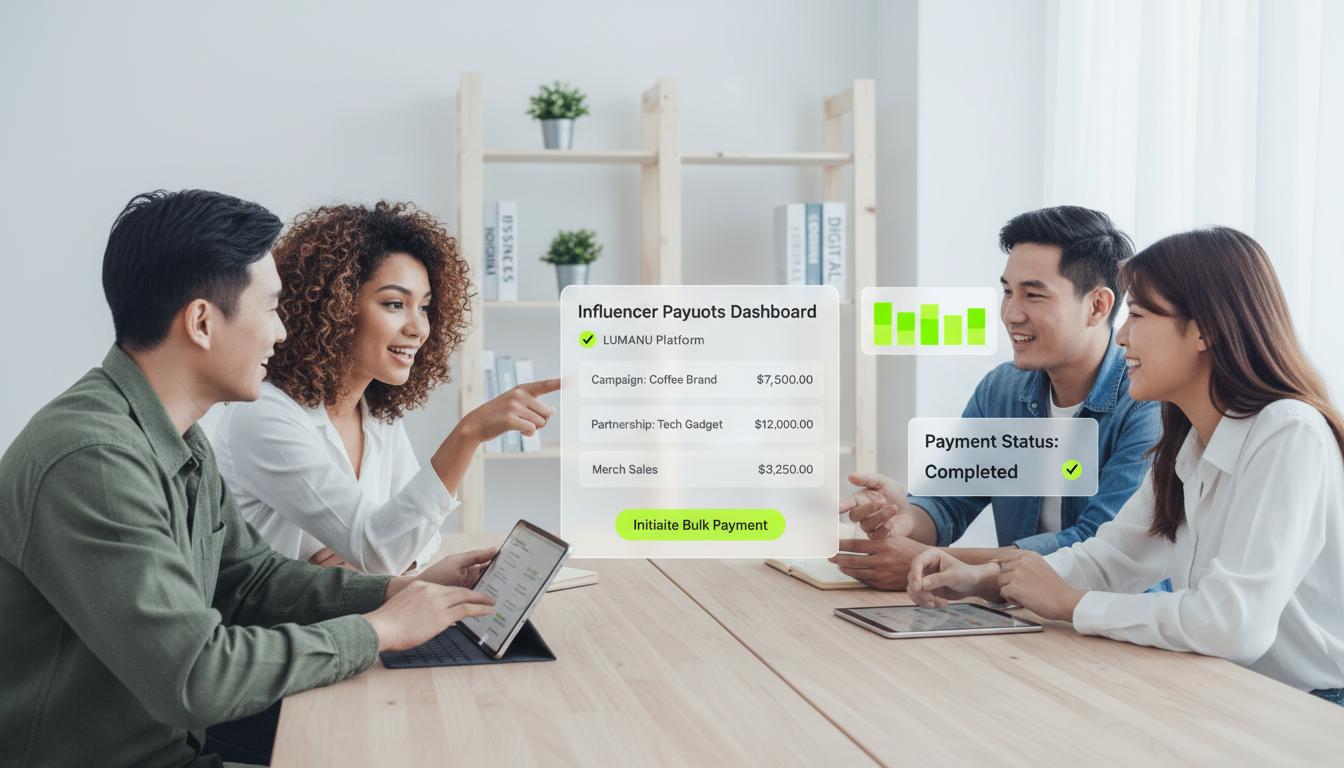
Best Influencer Payment Platforms for Brands and Agencies in 2026
The best influencer payment platform depends on one question: merchant of record or payouts-only. Compare Lumanu, Influencer Platforms, Stripe, Tipalti, Wise, and PayPal.

Paul Johnson

9
/
3
/
2026
The best influencer payment solution for large brands and agencies in 2026 comes down to one question before any other: does the tool act as a merchant of record, or does it only move money? A merchant of record becomes the contractual and tax counterparty to every creator and consolidates hundreds of payouts into a single vendor record in your ERP. Lumanu is a merchant of record service built for this, and some influencer marketing platforms also act as merchant of record to support their payment workflows. Many influencer marketing platforms will hold all customer funds in a pooled bank account and support payouts. Stripe Connect, Tipalti, Wise, and PayPal move money well, and some of them collect tax forms and file information returns on your behalf, but they leave your company as the legal payer of record, which keeps W-9 collection, 1099 filing, and DAC7 exposure on your side of the ledger.
The stakes are rising because the spend is rising. In the Influencer Marketing Hub Benchmark Report 2026, 88% of marketers expect their influencer budgets to increase this year and 72% expect their budgets to grow by more than 50%. As budgets scale, the vendor count scales with them, and at some point the bottleneck stops being creative and starts being finance: who is onboarded, who has a valid tax form on file, who got paid, and who shows up as a vendor record at year-end.
This article compares six options brands and agencies actually evaluate in 2026: Lumanu, influencer marketing platforms with built-in payments, Stripe Connect, Tipalti, Wise, and PayPal. It covers what each does well, where each falls short, and which fits the way your program runs.
Key takeaways
A merchant of record becomes the contractual and tax counterparty for each creator deliverable, which removes the need to set up hundreds or thousands of individual vendor records in your ERP. A payouts-only tool moves money but leaves your company as the legal payer.
Lumanu is a merchant of record service for influencer payments: it collects tax documents, files US, UK, and EU reporting, and bills the brand through a single consolidated invoice. Stripe Connect, Tipalti, Wise, and PayPal are payment infrastructure or accounts-payable tools, not merchants of record.
The strongest evaluation criteria for any influencer payment solution are compliance scope, payout speed, global coverage, creator onboarding experience, and the support your team and your creators actually receive. Lumanu supports 180+ countries and 132 currencies, with instant payouts through local payment rails, Visa Direct, and PayPal with a dedicated support team.
What an influencer payment platform actually does
An influencer payment platform handles vendor onboarding, compliance, tax and payouts to creators and influencers, so brands and agencies don't have to support each person through a general accounts-payable process built for traditional vendors. The process requires collecting tax forms, validating identity and banking details, and sending money globally to every creator a company works.
A treasury or accounts-payable tool can easily make payments to vendors. An influencer payment solution does more than that, because paying creators is not the same as paying B2B vendors. The actual process is made up of several steps:
Pay creators on time, globally. Local rails, instant options, and multiple payout methods so a creator in Manila and a creator in Manchester both get paid without a 60-day wait.
Onboard creators who are not registered businesses. Nano and micro creators are the fastest-growing tier in 2026, and most of them do not have a registered company in the US or a VAT number in the EU. A tool that requires every payee to be a registered entity excludes the segment that is growing fastest.
Validate tax and banking information in real time. Collect and check W-9, W-8BEN, and W-8BEN-E forms, run TIN matching, and verify bank details before the first payment, not during a year-end scramble. This is not tax advice, always confirm requirements with your tax counsel.
Generate invoices your accounting system can reconcile. Self-billing invoices and, ideally, a single consolidated invoice per batch instead of hundreds of small ones.
Handle tax reporting in every jurisdiction you operate in. US 1099 filing, EU DAC7, UK platform-operator rules, and withholding where treaties require it.
The strongest options go one step further and take on the merchant of record role. That is the dividing line in this comparison, so it is worth being precise about what it means.
Merchant of record vs. payouts-only: the distinction that supports influencer payments at scale
A merchant of record becomes the contractual and tax counterparty influencer partnerships, acting as a single vendor in your ERP instead of hundreds or thousands of individual ones. A payouts-only tool only sends money. You remain the legal counterparty for that creator, which means you carry the compliance, the tax reporting, and the audit risk. If a creator never returns a W-9 or provides an incorrect EIN or SSN, that is your problem. If the IRS questions a filing, that is your name on it. If an EU tax authority asks who facilitated the payment, that is you.
A merchant of record changes the contractual structure. The merchant of record buys the deliverable from the creator and resells it to the brand. Operationally, that means the merchant of record is the counterparty, not your company. The merchant of record is the one collecting the tax form, issuing the self-billing invoice, filing the information return, and standing behind the payment. You still maintain the relationship and manage and approve deliverables, but your company works with one vendor instead of hundreds or thousands, and that one vendor carries the reporting obligation.
This is different from a payments API which simply executes a transfer. A merchant of record takes on the legal and tax relationship. The two can look identical in a product demo and behave very differently at audit time.
A few specifics to understand in 2026:
1099 and W-9 mechanics (US). US payers collect Form W-9 from US-person payees and W-8 series forms (W-8BEN for individuals, W-8BEN-E for entities) from foreign payees, then file a 1099 for non-employee compensation above the IRS threshold. For 2026 payments, that threshold rose from $600 to $2,000 under the One Big Beautiful Bill Act, with inflation adjustments starting in 2027. The filing obligation sits with whoever is the payer of record. If you use a payouts-only tool, that is you. If you use a merchant of record, they are responsible for filings.
DAC7 (EU). Under EU Directive 2021/514, known as DAC7, the reporting obligation falls on the platform operator that facilitates the transaction. Operators collect and verify seller data and file annually with one EU member state by January 31, after which the data is shared across member states. Pure payment processors that only move money are generally excluded from DAC7, which is precisely why the question of who sits in the facilitating-counterparty seat matters. A merchant of record that facilitates the deliverable can carry that obligation for you. (There is a seller-level exclusion for fewer than 30 transactions and under EUR 2,000 in a year, but that does not change who must report once a creator clears it.)
Comparison table
The table below compares six common ways brands pay creators: Lumanu, influencer marketing platforms with built-in payments, Stripe Connect, Tipalti, Wise, and PayPal Payouts.
Information sourced from each provider's public site and developer documentation as of June 2026. Coverage counts, speed, and pricing change frequently and vary by plan, region, and negotiated terms.
Lumanu | Influencer platforms (built-in payments) | Stripe Connect | Tipalti | Wise (Business) | PayPal Payouts | |
Merchant of record | Yes | Often. Usually holds all funds in a pooled account | No | No | No | No |
What it is | Merchant of record service for creator payments | Campaign platform that acts like an agency | Payments infrastructure for platforms and marketplaces | Accounts-payable and mass-payments software | Cross-border payment infrastructure | Bulk payout service from a payment processor |
Pricing model | % based on payment volume | Typically % based on payment volume | Per active account + per payout, plus processing fees; 1099 e-file priced per form | Platform fee plus transaction, per-payment, and filing fees | Per-transfer fee at the mid-market FX rate; plan-based account fees | Per-payout transaction fee, funded from PayPal balance |
Payout countries | 180+ | Depends on underlying processor | 118 total, with support limited by originating currency and country | ~190+ | 140+ | 95+ (standard) / 200+ markets (Enterprise / Hyperwallet) |
Currencies | 132 | Depends | 135 total, limited based on originating currency | ~120 | 40+ | 23–24 (standard) / 50+ (Enterprise) |
Payment speed | Instant to creator wallet, multiple withdrawal options | Depends on payroll cycle | Standard bank payouts; instant payout option for a fee | Varies by method (ACH, wire, local) | Minutes to ~2 business days | Minutes to ~24 hours (to a PayPal balance) |
Tax form handling | Fully managed by Lumanu | Depends on the platform and its processor | You are filer of record. Collects W-8 / W-9; can file 1099-NEC / MISC | You are filer of record. Collects W-9 and W-8 series; 1099 / 1042-S e-file via a Zenwork integration; DAC7 support | No tax-form service; you remain responsible | Issues 1099-K as a processor; does not file 1099-NEC for you |
Consolidated single invoice | Yes | Sometimes | No (per connected account) | AP and self-billing invoices, not a single consolidated vendor record in the MoR sense | No | No |
Agency / multi-client support | Yes, plus an existing network of talent agencies | Varies | Yes (built for sub-accounts) | Yes (multi-entity) | Limited | Limited |
The six options reviewed
Here is a detailed overview for each of the six options: who it's built for, and how it addressed merchant-of-record capabilities.
Lumanu
Lumanu is the merchant of record service built for the global creator economy. It acts as the single vendor that consolidates hundreds or thousands of creator collaborations into one invoice, collects and validates tax and banking information, and takes on the tax-reporting obligation across the US, UK, and EU. It supports 180+ countries and 132 currencies, with instant payouts through local rails, Visa Direct, and PayPal. Customers include Notion, Warner Music Group, PepsiCo, and Village Marketing (WPP).
Lumanu by the numbers:
$1.5B+ in payments processed
500,000+ vendors onboarded
900,000+ invoices automated (eliminated)
180+ countries supported
$1M+ payouts processed daily
Strong fit when: you are running a high volume of creator collaborations, you want one vendor record in your ERP, and you want the compliance and counterparty risk off your books. You want to manage influencer payouts via API.
"We went from dozens of POs, vendors, and invoices for each campaign to one vendor, one PO, one invoice." - Danielle Ito, Former head of Influencer Marketing @ Notion.
Less of a fit when: You pay a small handful of registered, domestic vendors and have no cross-border or tax-reporting complexity. In that case the merchant of record model may be more structure than you need. You have a lean Marketing organization and decide to outsource all influencer payments to the agency, in this case they act as merchant of record.
Influencer marketing platforms with built-in payments
Many campaign platforms (the tools you use to discover creators, manage briefs, and track deliverables) now add a payment layer so you can pay inside the same product. This is convenient, and for teams that already live in one platform it removes a step. Behind the scenes, that payment layer is usually powered by an underlying provider such as Tipalti, Stripe, or Lumanu, and the platform may sit in the flow as a merchant of record itself.
The tradeoff to understand is the pooled-funds model. When your money lands in a shared balance before it reaches creators, and something goes wrong (a delayed payout, a missing tax form, a reconciliation question), resolving it can become a game of telephone: the creator asks the platform, the platform asks its underlying processor, and you are a step removed from the answer. The more layers between you and the money, the longer that loop.
Strong fit when: payment volume is modest and the convenience of paying inside your campaign tool outweighs the desire for direct control.
Less of a fit when: payments are a large part of your operation and you want a direct line to where the money and the compliance actually sit. You have multiple teams paying creators, affiliates, live event contractors.
Stripe Connect

Stripe Connect is payments infrastructure for platforms and marketplaces. It is well-built, widely documented, and developer-friendly, and it offers a Connect 1099 product that can create, file, and deliver 1099 forms and collect W-8 / W-9 forms. The important nuance for brands: when the platform controls pricing, the platform is responsible for filing the relevant 1099 forms. Stripe is the infrastructure, but your company (or whoever runs the platform) remains the payer of record. Stripe Connect is not a merchant of record for your creators.
Strong fit when: you are building your own product and want to embed payments and optional tax filing with full control over the integration.
Less of a fit when: you want a turnkey service that takes the counterparty relationship off your plate rather than an SDK to build around.
Tipalti
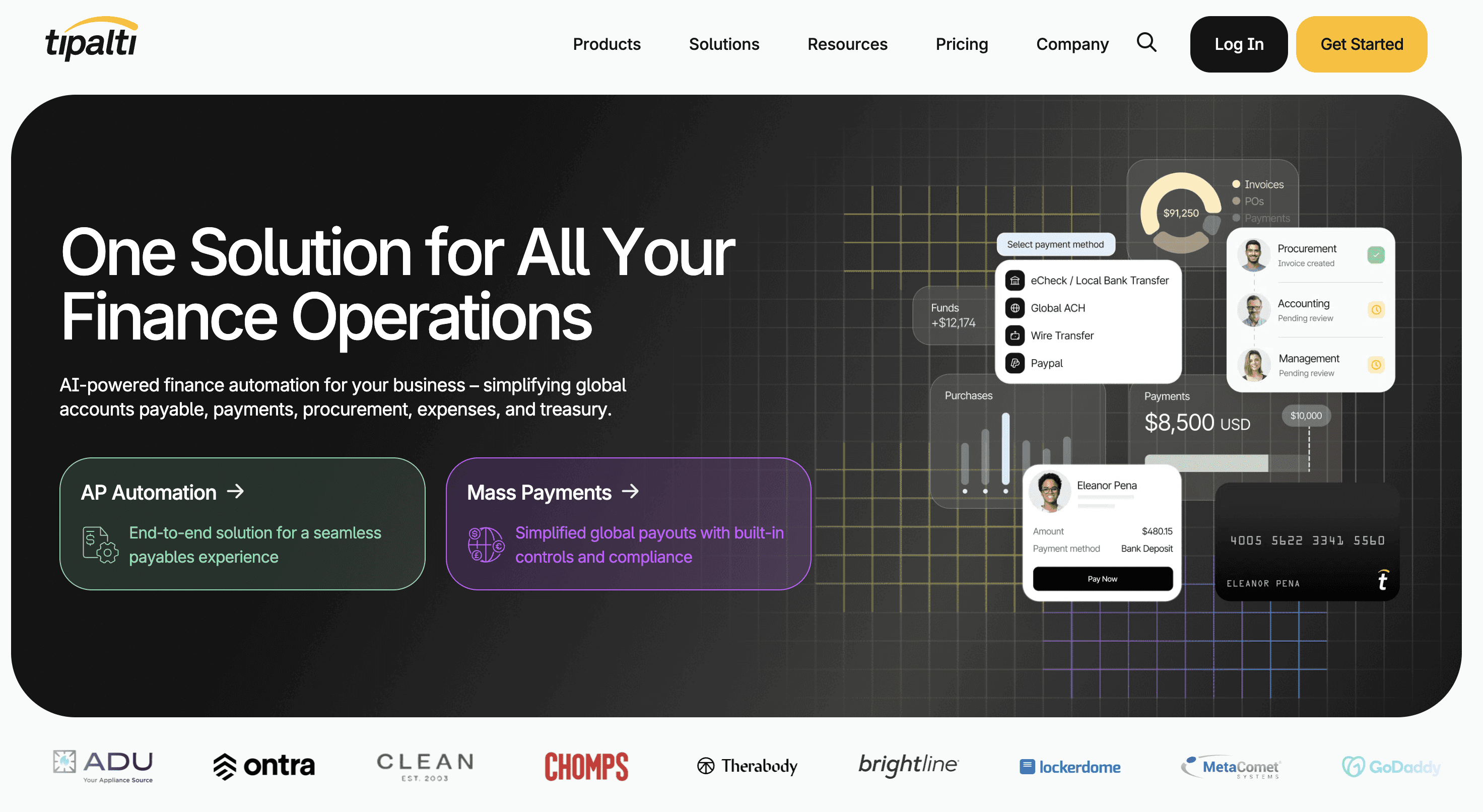
Tipalti is accounts-payable and mass-payments software with genuinely deep tax capabilities. Its guided tax wizard collects the correct form (W-9, W-8BEN, W-8BEN-E, and others), runs TIN matching against a large rule set, generates 1099 and 1042-S preparation reports, e-files through a Zenwork integration, supports self-billing invoices in Europe, and offers DAC7 features. For finance teams managing large, complex global supplier bases, it is a serious tool, and it does more tax work out of the box than most options here.
What it does not do is become your counterparty. Tipalti performs this work on your behalf, which means your company remains the payer of record and carries the underlying obligation. It is also an enterprise platform you adopt and integrate, with custom pricing and a longer implementation than a turnkey service.
Strong fit when: you have a broad global supplier base beyond creators, an existing ERP-centric finance operation, and you want one tool to automate AP and mass payouts with strong tax tooling.
Less of a fit when: your priority is removing the counterparty and vendor-record burden entirely rather than automating it under your own name. You want to deliver an easy to use experience to your vendors - Tipalti is built for onboarding B2B vendors, not individuals.
Wise (Business)
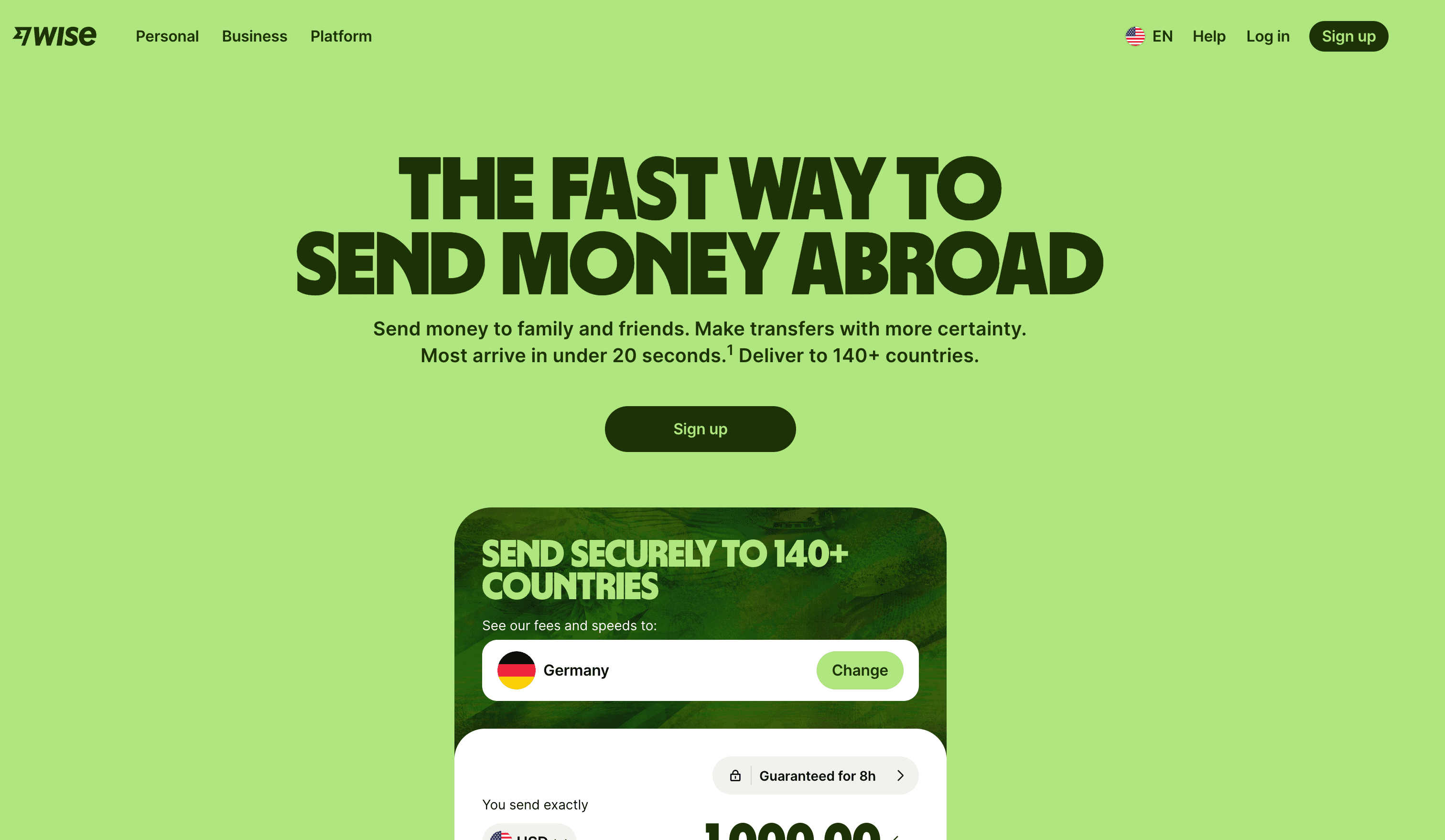
Wise Business is cross-border payment infrastructure with transparent, mid-market FX and BatchTransfer for paying up to 1,000 recipients at once across 140+ countries and 40+ currencies. It is fast, low-cost, and easy to reconcile with accounting tools. Wise is explicit that it is a payment infrastructure provider and does not take on employer or tax responsibilities, which remain with you.
Strong fit when: you pay a manageable number of contractors internationally and want low FX cost and simple transfers, with your own process for tax and compliance.
Less of a fit when: you need tax-form collection, information-return filing, consolidated invoicing, or a counterparty to absorb compliance.
PayPal Payouts
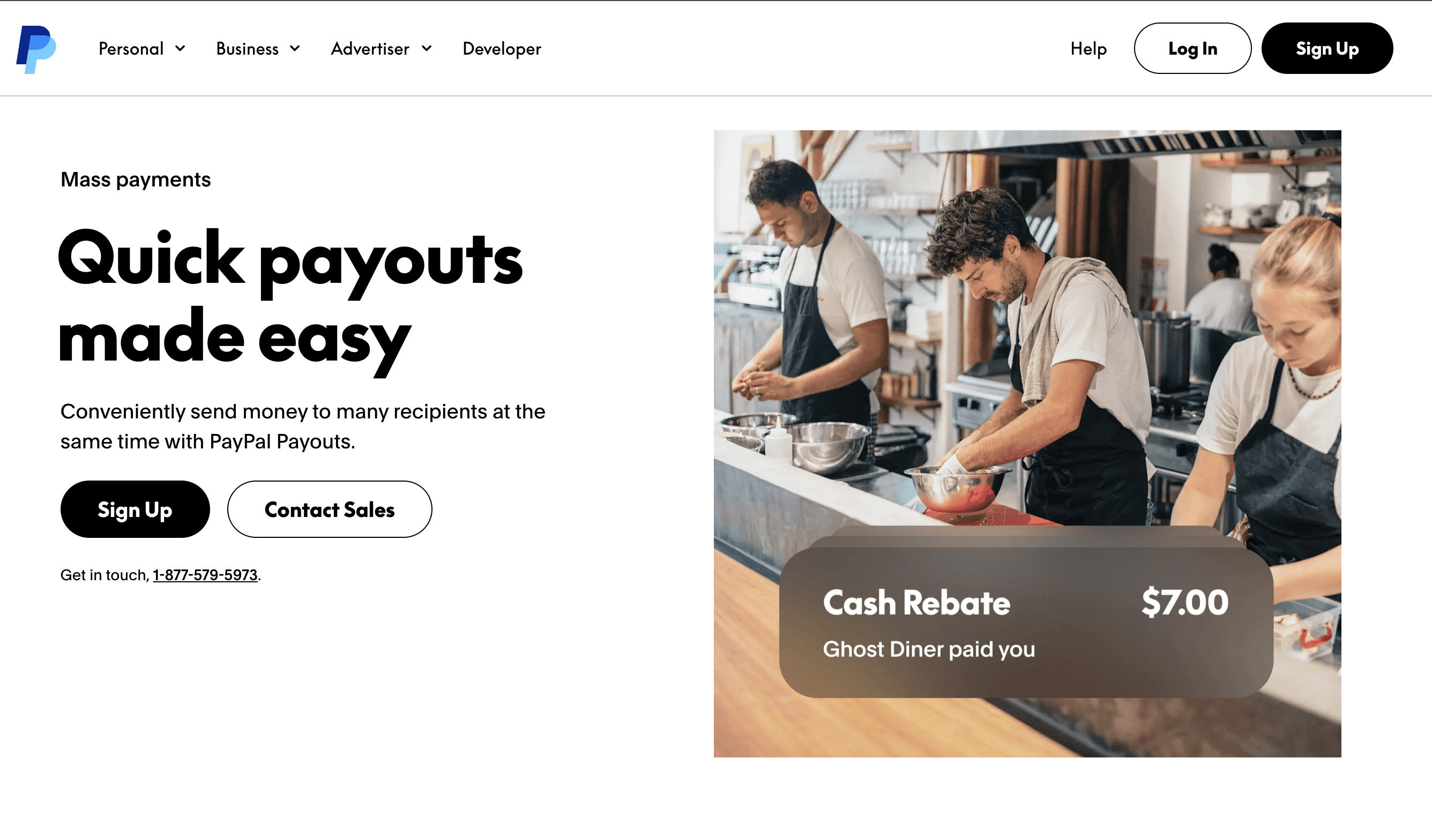
PayPal Payouts is a bulk payment service from a processor most creators already recognize, which lowers onboarding friction. Standard Payouts reaches 95+ countries in roughly 23 currencies, and Enterprise Payouts (powered by Hyperwallet) reaches 200+ markets and 50+ currencies. Payouts are funded from your PayPal balance and typically arrive within minutes to a day. On tax, PayPal issues a 1099-K as a processor based on payment thresholds. It does not collect W-9s or file 1099-NEC forms for you, and you remain the payer of record.
Strong fit when: your creators are already on PayPal, volume is moderate, and recipient familiarity matters more than tax handling.
Less of a fit when: you need contractor tax reporting, consolidated invoicing, or coverage and FX terms optimized for large global programs.
Five questions to ask when selecting an influencer payment solution
Five questions cut through most of the marketing in this category and get straight to whether a tool can actually replace your current vendor process.
1. Does it act as a merchant of record? This is the question most teams overlook and the one that matters most at scale. If the tool is only a payment processor, your company stays the legal counterparty for every creator, which means you carry the compliance, the tax reporting, and the audit risk. A merchant of record absorbs that and becomes the contractual party for the deliverable. For any program running in the US or globally, this is the single biggest reason to choose a merchant of record service over a payouts-only tool.
2. How does it handle creators without a registered business? Nano and micro creators are the fastest-growing tier, and most do not have a registered company in the US or a VAT number in the EU. A tool that requires every creator to be a registered business excludes your highest-growth segment. Ask, too, whether the service already has a network of creators and talent-management agencies onboarded, because that removes setup work before you even start.
3. What does your ERP and finance team actually manage? If the service sends one consolidated invoice per batch, finance sees one vendor record. If it does not, finance sees hundreds of creator records and hundreds of small invoices, and reconciliation gets worse the more you scale. This is the largest operational saving and the easiest one to miss in a demo, because a demo rarely shows you the year-end view.
4. How fast do creators get paid, and over what rails? Payout speed is where the "where is my payment" texts come from. Ask which local rails the tool uses, whether instant options exist, what minimum thresholds apply, and who absorbs FX and fees.
5. Can it handle an agency or multi-client structure? Agencies and brand teams running multiple clients or sub-brands need clean separation: sub-accounts, client-level reporting, and ideally white-labeling. Ask whether the model pools funds, and if so, what happens when a payment or a form goes sideways and you need a direct answer rather than a relay through several parties.
Which option fits which team
The right choice depends mostly on how many creators you pay and how many countries they're in, not on brand reputation.
A team paying a few dozen mostly-domestic, already-registered vendors can get by with Wise or PayPal; a team paying hundreds or thousands of individual creators across multiple countries needs a merchant-of-record service to avoid a compliance burden that scales with headcount.
If you are an engineering-led company building your own creator product and want to own the integration, Stripe Connect gives you the most control.
If you have a broad global supplier base well beyond creators and an ERP-centric finance team, Tipalti is a strong accounts-payable and mass-payments engine with real tax tooling.
If your campaign tool's built-in payments cover modest volume and you value paying in one place, an influencer platform with embedded payments can be the path of least resistance.
The case for a merchant of record service like Lumanu gets stronger as two things grow: the number of creators you pay and the number of jurisdictions you pay into. At a few dozen registered domestic vendors, the counterparty model is more than you need. At hundreds or thousands of creators across many countries, many of them unregistered individuals, the merchant of record model is what keeps your vendor list, your tax filings, and your audit exposure from scaling linearly with your program.
Where Lumanu fits in 2026
Lumanu combines merchant-of-record status with instant global payouts and consolidated invoicing.
Across the options reviewed, Lumanu is the only one that combines instant global payouts, consolidated single-invoice billing, US, UK, and EU tax reporting, and a merchant of record structure that takes the counterparty relationship off your company entirely. The others move money well, and a few do meaningful tax work, but they leave your company as the legal payer for every creator. That is the layer Lumanu covers and the others do not.
Put simply: a payouts-only tool answers the question "how do I send money to this creator." A merchant of record answers a different one, "how do I work with thousands of creators as if they were a single, compliant vendor," which is the question that actually determines whether an influencer program can scale.
Frequently asked questions
What is a merchant of record for creator payments?
A merchant of record is the legal and tax counterparty that buys a creator's deliverable and resells it to the brand. Operationally, it collects the creator's tax form, issues a self-billing invoice, files the required information returns, and pays the creator, so the brand works with one compliant vendor instead of hundreds of individual creator records. A payment processor, by contrast, only moves the money and leaves the brand as the legal payer.
Do I have to send a 1099 to influencers I pay?
If you are a US payer and a US-person creator clears the IRS reporting threshold, you generally file a Form 1099-NEC for that non-employee compensation. For 2026 payments, the threshold rose from $600 to $2,000 under the One Big Beautiful Bill Act, with inflation adjustments beginning in 2027. If you use a payouts-only tool, that filing is your responsibility. If you use a merchant of record, the merchant of record is the counterparty that handles it.
What is DAC7 and does it apply to influencer payments?
DAC7 is EU Directive 2021/514, which requires digital platform operators that facilitate certain transactions to collect, verify, and annually report seller data to an EU tax authority by January 31. The reporting obligation sits with the platform operator that facilitates the transaction, not with a pure payment processor, and it applies to operators inside and outside the EU that have reportable EU sellers. If a creator is an EU resident clearing the seller thresholds, the platform that facilitates that payment as counterparty carries the obligation. DAC7 is oonly applicable to platforms and marketplaces, not brands and agencies.
Can these influencer payment platforms pay creators who do not have a registered business?
Most can pay individuals, including PayPal, Wise, Stripe Connect, Tipalti, and Lumanu. The difference is what happens around the payment: collecting the right tax form, validating identity and banking details, and taking on the reporting. Nano and micro creators are the fastest-growing tier and largely unregistered, so the onboarding and compliance experience matters more than the raw ability to send money.
Which is the best influencer payment platform for large brands and agencies in 2026?
It depends on scale and complexity. For high-volume, multi-country programs paying many unregistered creators, a merchant of record service like Lumanu is the strongest fit because it consolidates everything into one compliant vendor record and absorbs the tax-counterparty role. For lighter, mostly domestic needs, simpler payout tools like Wise or PayPal can be enough, and for engineering teams building their own product, Stripe Connect offers the most control. For teams with the band with, using their AP tools like Tipalti and Bill can work.
How much does Lumanu cost?
Lumanu charges a variable Funding Fee based on how much you pay through the platform, plus an annual platform fee which can be waived once you hit a certain volume threshold. There's no traditional software subscription or per-seat license; most active customers end up paying based on what they actually send to creators, not a fixed cost to use the platform.
Does Lumanu charge fees to influencers?
Lumanu does not charge a fee to influencers to create accounts or withdraw via local rails (ACH, SEPA, Faster payments, CHATS, EFT, and others). Creators can also withdraw via PayPal and VISA Direct and pay a fee for those services.
More Posts