Best All-in-One Influencer Marketing Platforms in 2026: Compared by Use Case
Compare 11 all-in-one influencer marketing platforms by use case in 2026, including how each one handles creator payments, tax compliance, and your funds.

Paul Johnson

7
/
31
/
2026
There is no single best all-in-one influencer marketing platform. The right choice depends on your program size, channel mix, and how you plan to pay creators. Enterprise programs with governance requirements tend toward CreatorIQ, Traackr, Later Influence, or Sprout Social, which also serves social-first teams that want influencer marketing inside their social management stack. DTC and e-commerce brands gravitate to Grin, Aspire, Modash, Upfluence, or Superfiliate, and European programs often start with Kolsquare.
This guide compares eleven platforms across six criteria, including one that most comparisons skip entirely: how each platform actually moves money to creators, and what happens to your funds along the way. Lumanu provides payment infrastructure to several of the platforms below and competes with none of them, which is exactly why we can cover this dimension in detail.
Influencer marketing budgets continue to grow. According to the Influencer Marketing Hub Benchmark Report 2026, 87.49% of marketers expect their influencer budgets to increase this year. As budgets grow, the operational and financial questions covered here matter more, not less.
What counts as an all-in-one influencer marketing platform?
An all-in-one influencer marketing platform combines five functions in a single product: creator discovery and vetting, campaign and relationship management, content and usage rights workflows, measurement and reporting, and creator payments. Most platforms deliver the first four natively. The fifth, payments, is where "all-in-one" claims vary the most. Many platforms manage payment functionality via third-party rails (PayPal, Stripe, Airwallex, Tipalti, Trolley), some partner with a dedicated payments and compliance provider, and some leave payments to your accounts payable team entirely.
That distinction is not a footnote. It determines who collects tax forms, who carries compliance liability, what fees and exchange rates creators absorb, who is on the hook when creator support issues arise during onboarding or payments do not arrive, and where your campaign funds sit between funding and payout.
How to evaluate influencer marketing platforms
Every platform in this guide is assessed against the same six criteria:
Creator discovery and vetting. Database size, audience data quality, fraud detection, brand safety screening.
Campaign and relationship management. Briefs, approvals, communication, long-term ambassador workflows.
Content and usage rights. Licensing, whitelisting/partnership ads, content libraries.
Measurement and reporting. Attribution, benchmarking, competitive intelligence, API access.
Commerce and affiliate. Shopify and TikTok Shop integrations, affiliate links, commission management.
Payments and treasury. Payout methods, country and currency coverage, exchange rates creators receive, tax compliance (in the US, the 1099-NEC reporting threshold is $2,000 for 2026; in the EU, DAC7 places reporting obligations on digital platforms), who acts as merchant of record, and whether client funds sit in a segregated account or a pooled operating account.
Most all in one platforms support items 1-4 with the difference being UX and UI or personal preference. The 5th item is a point of differentiation among platforms across how they support variable rate commissions and affiliate payouts. The sixth criterion gets the least attention from buyers and causes the most operational pain after signature. It is also the criterion your finance and procurement teams will ask about, so we cover it for every platform below.
As far as roadmap, you’ll want to understand how your shortlisted platforms are building AI into their platform. My belief is AI will have the biggest impact on finding and recommending creators that are a fit based on all your past results. There are also some interesting AI native influencer platform startups to watch like Passo, Tano, Aha creator(not reviewed in this article).
You should also understand the platform's partnership plans with Meta, Tiktok, YouTube (and LinkedIn for those working with B2B). These platforms have realized the importance of creators to their ecosystems and are starting to open up data and analytics to platforms to help customers find and activate creators based on proprietary data.
All in-one Influencer Platforms
CreatorIQ
CreatorIQ is the system of record for large, multi-brand creator programs. It serves 1,300+ brands and agencies including Nestlé, Unilever, and Sephora, and is known for Enterprise readiness, governance controls, and measurement across markets. One of the main reasons marketers choose CreatorIQ is robust analytics and reporting capabilities. They have built out authentication for creators across platforms which automatically pulls in reach/ engagement/ comment data. Pricing is not published; as of 2026, per public sources, typical contracts run roughly $30,000 to $36,000 per year.
Payments and treasury. CreatorIQ offers a native payments module, CreatorIQ Pay, with two paths: brands can connect their own PayPal account, or use full-service global payments built on Airwallex rails (funding in 22 currencies, payouts in 60+ currencies across 80+ markets, with US tax form generation). Enterprise brands that need broader coverage, segregated funds, or vendor-of-record invoicing pair CreatorIQ with Lumanu: client funds are held in segregated accounts with up to $3M in FDIC insurance, and finance teams fund the account through compliant invoices that work with major AP and ERP systems including Coupa, SAP, NetSuite, Workday, Zip, and Ariba. Notion runs its creator program this way, using CreatorIQ for campaign management and Lumanu for payments.
Traackr
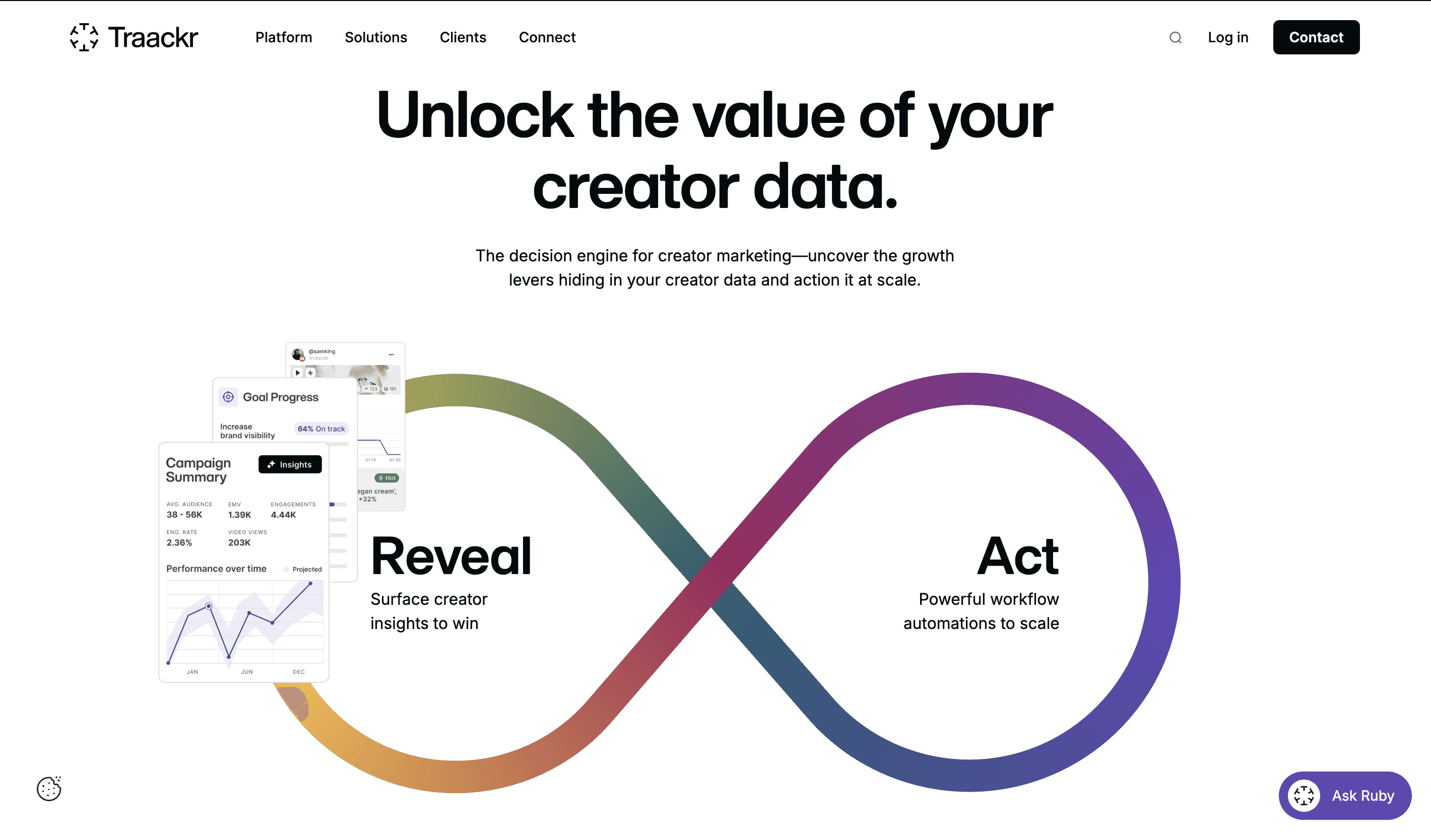
Traackr is the analytics-led choice for global enterprise programs, strongest in beauty and luxury (L'Oréal, Coty, Sephora). Its spend efficiency benchmarking and vetting depth suit brands that need a repeatable process across markets. The platform helps brands understand the EMV from influencer campaigns across social media. Pricing is not published; as of 2026, per public sources, contracts reportedly run $25,000 to $55,000 per year.
Payments and treasury. Traackr includes in-platform payments facilitated by Trolley, a third-party payout provider; the brand remains the payer and must manage compliance requirements via Trolley, and Traackr does not publish country or currency coverage for payouts. Traackr does not act as merchant of record. Brands that want vendor-of-record invoicing, segregated funds, or broader payout coverage run Traackr alongside a payments layer such as Lumanu.Captiv8 (now part of Influential)
Captiv8 built an enterprise platform combining influencer marketing with creator commerce (TikTok Shop, storefronts, affiliate). Publicis Groupe acquired the company in May 2025, and as of 2026 Captiv8 has been integrated into Influential, Publicis's creator agency: the Captiv8 homepage now directs new business to Influential, and there is no longer a path to buy the platform standalone. Existing customers continue to use it, but new engagements run through Influential's managed services under Publicis Connected Media.
Payments and treasury. The platform's in-platform payments run on Tipalti rails, with support marketed for 150+ local currencies, VAT handling, and 1099 generation through Tipalti.
Captiv8's trajectory is worth noting for any platform evaluation: platforms get acquired and consolidated, and a payments setup tied to a single platform inherits that platform's fate. Brands that separate the platform decision from the payments decision keep both flexible.
Best for social-first teams
Sprout Social Influencer Marketing
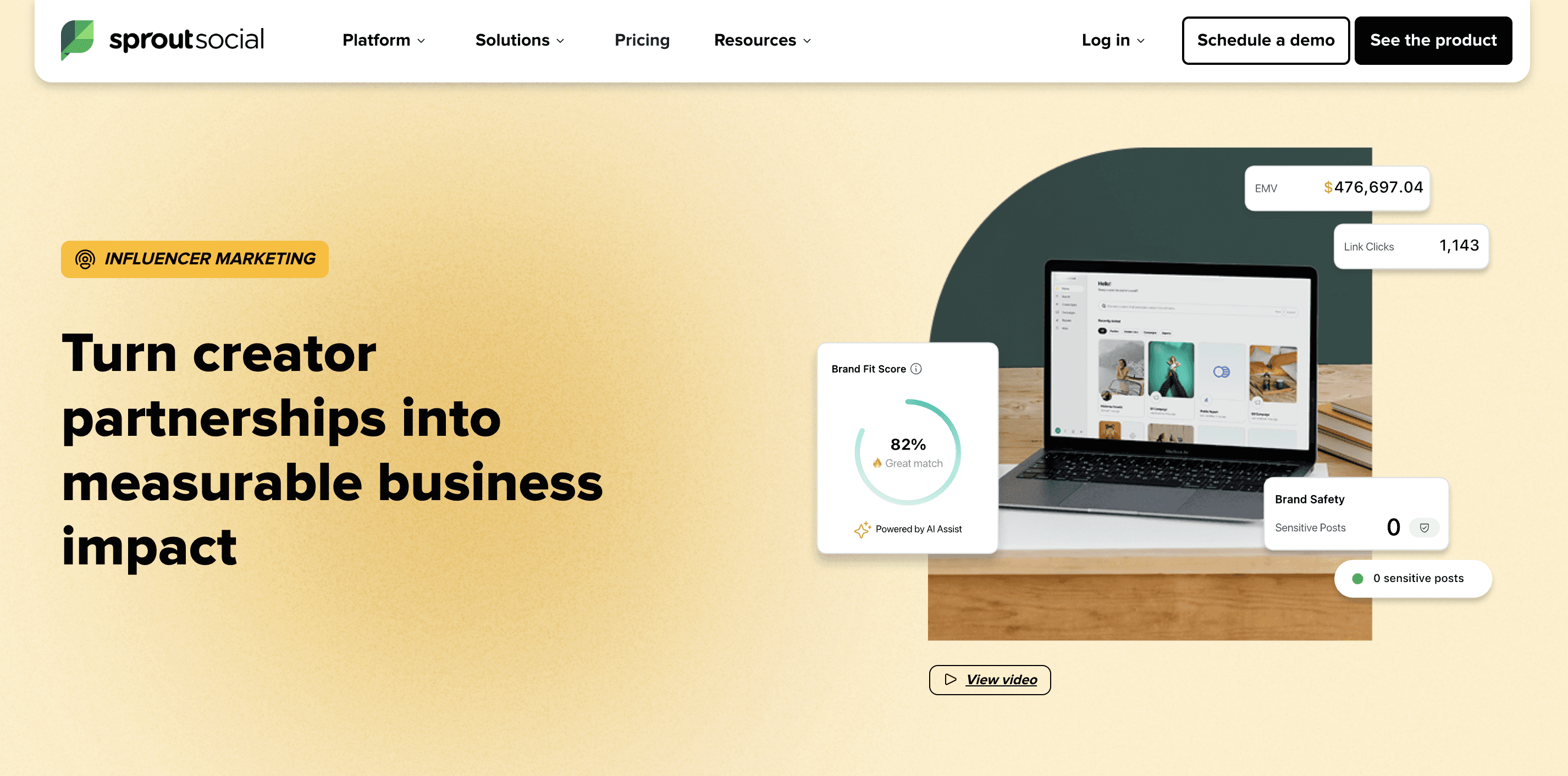
Sprout Social Influencer Marketing (built on the Tagger acquisition) puts creator discovery, campaign management, and influencer analytics inside the same platform a social team already uses for publishing, engagement, and listening. It sells to enterprise brands and agencies as a separate product from Sprout's base plans. Pricing for the influencer product is custom; as of 2026, per public sources, reported figures start around $1,600 per month for the first seat.
Payments and treasury. Sprout Social announced a native payments integration with Lumanu in June 2026 that embeds payment and compliance infrastructure directly into the influencer marketing workflow. Creators onboard once with Lumanu, which handles identity verification and tax validation. Client funds are held in segregated accounts with up to $3M in FDIC insurance, tied to a real-time, audit-ready ledger, and finance teams fund campaigns through compliant invoices compatible with major AP and ERP systems. For finance and procurement, this means a single vendor setup covers every creator paid through the platform.
Later Influence
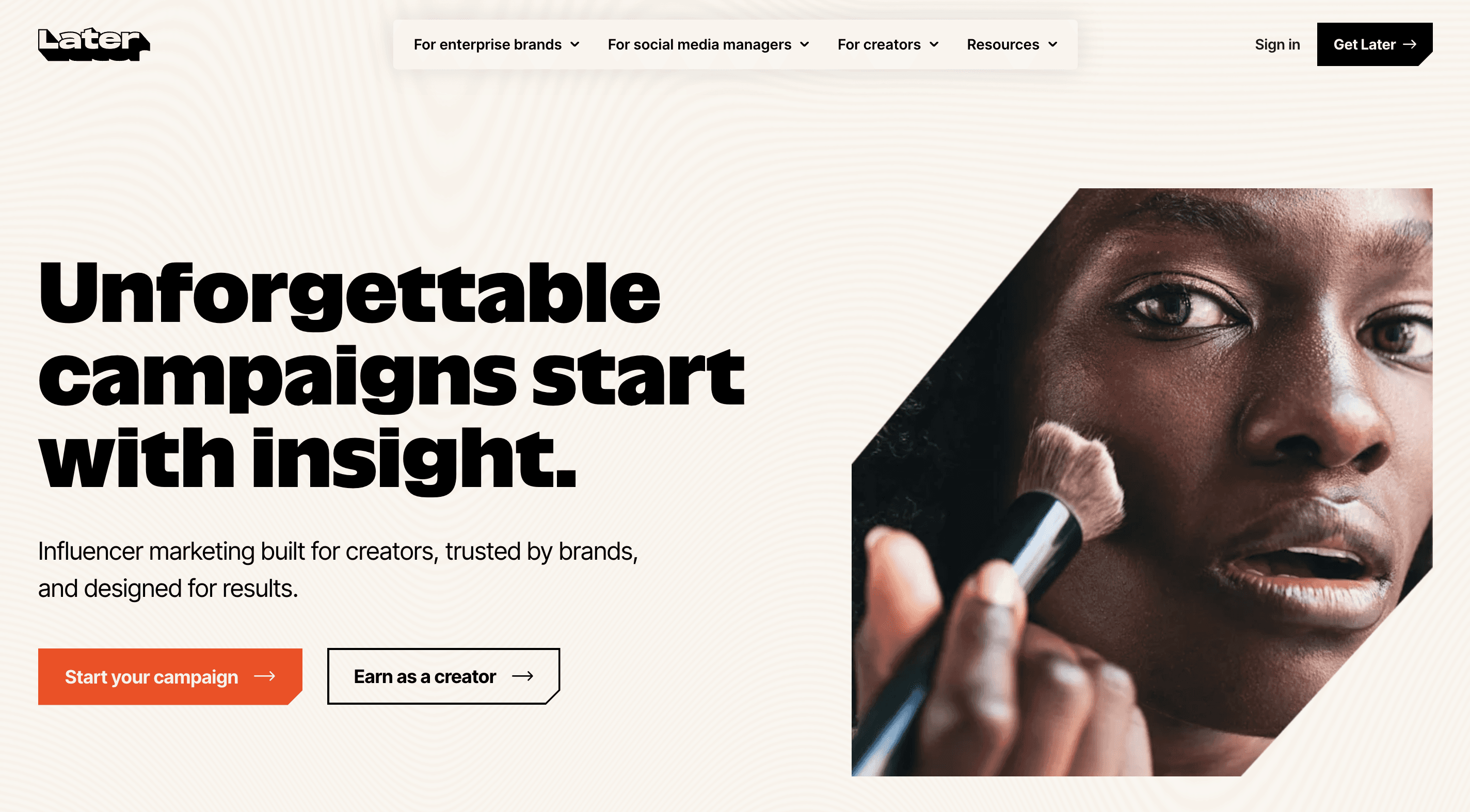
Later Influence (formerly Mavrck, acquired by Later in 2022 and relaunched under a comprehensive rebrand in 2026) pairs enterprise influencer marketing with Later's social media management products and managed campaign services. Later combines influencer marketing with social media post scheduling, visual content calendars, and an easy user learning curve. They are a mid market focused version of Sprout Social + Sprout Influencer. Its January 2025 acquisition of Mavely added social commerce reach. Pricing is not published; as of 2026, per public sources, reported contracts start around $28,500 per year.
Payments and treasury. Later Influence processes cash payouts through Stripe and PayPal integrations and gift card incentives through Tango Card. Tax documents come from the processors rather than the platform: per Later's help center, 1099s are issued by Stripe or PayPal directly. Later markets payment support in 25+ currencies, though its help documentation describes Stripe cash payouts in USD, CAD, and GBP. Later does not act as merchant of record.
Best for DTC and e-commerce brands
Grin

Grin is a creator management platform built for DTC brands running long-term ambassador programs, with deep Shopify integration, gifting workflows, and content rights management (including DocuSign integration). While Grin has a deep shopify integration, it was shut off from Meta access so worth considering if you focus on Instagram partnerships. They recently relaunched their entire platform around GIA their AI agent that runs your program for you. Pricing is not published and public reports conflict; as of 2026, per public sources, figures range from roughly $400 per month for entry tiers to $25,000 per year for the core platform.
Payments and treasury. Grin's creator payouts run through PayPal; per Grin's help documentation, PayPal is currently the only method creators can use to receive payments. Grin collects W-9s from US creators and W-8BENs from international creators in-platform and handles 1099s for US creators. Country and currency coverage, and the exchange rates creators receive, follow PayPal's terms.
Aspire
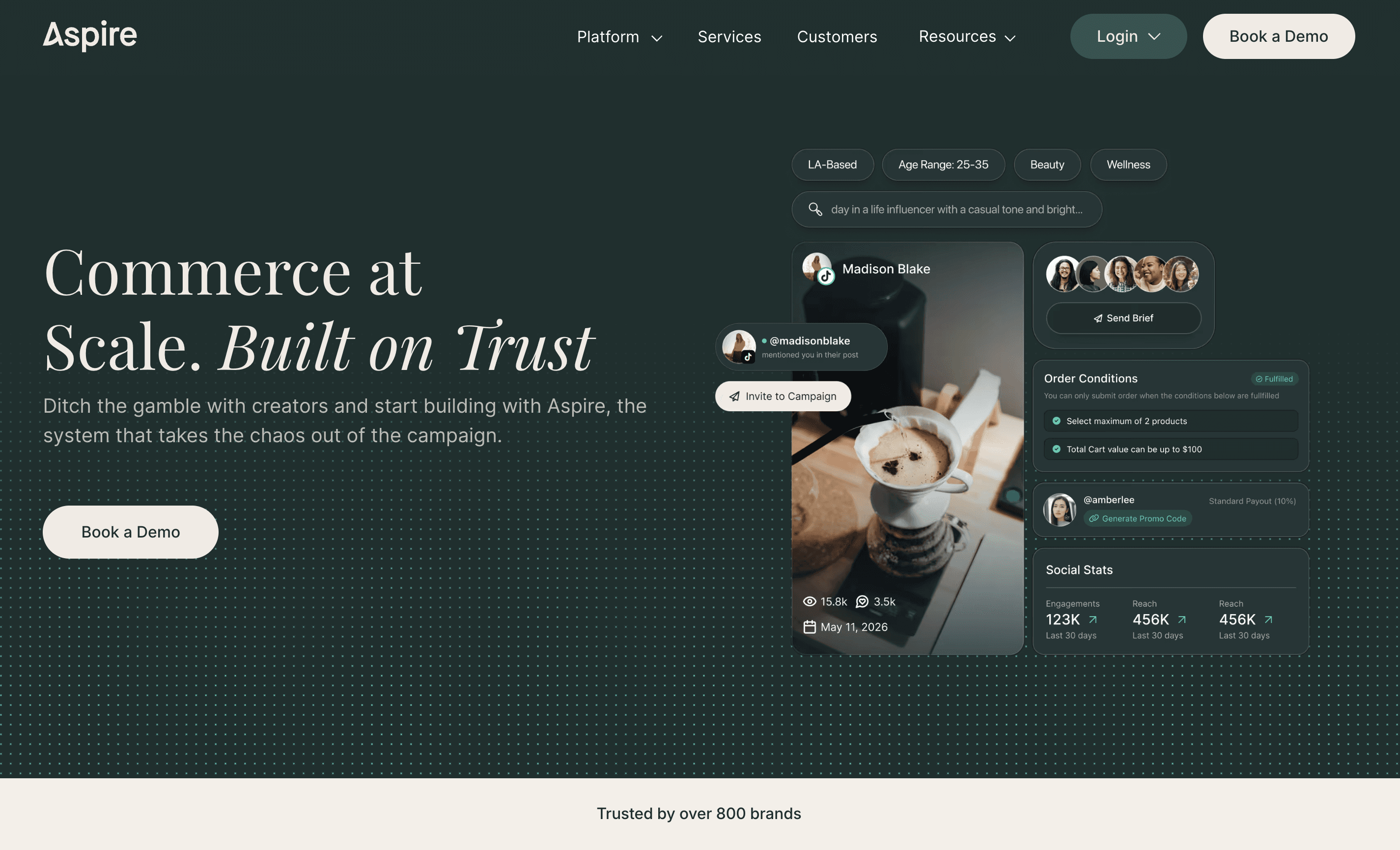
Aspire is built for fast-growing DTC brands, with strong UGC workflows, a creator marketplace, and content licensing for turning creator content into ads. They offer a self service platform as well as fully managed services for brands. Pricing is not published; as of 2026, per public sources, reported entry points run roughly $1,000 to $2,500 per month.
Payments and treasury. Aspire runs creator payouts on Lumanu behind the scenes: Aspire sits in the money flow and manages the creator experience, while Lumanu provides the underlying payment and compliance infrastructure. Aspire moved from PayPal to Lumanu to support large enterprise clients, reach creators in more countries, and give creators lower fees and better exchange rates than PayPal conversion provided. For brands, this means Aspire can support international programs without creators absorbing platform-fee and FX erosion on every payout.
Modash
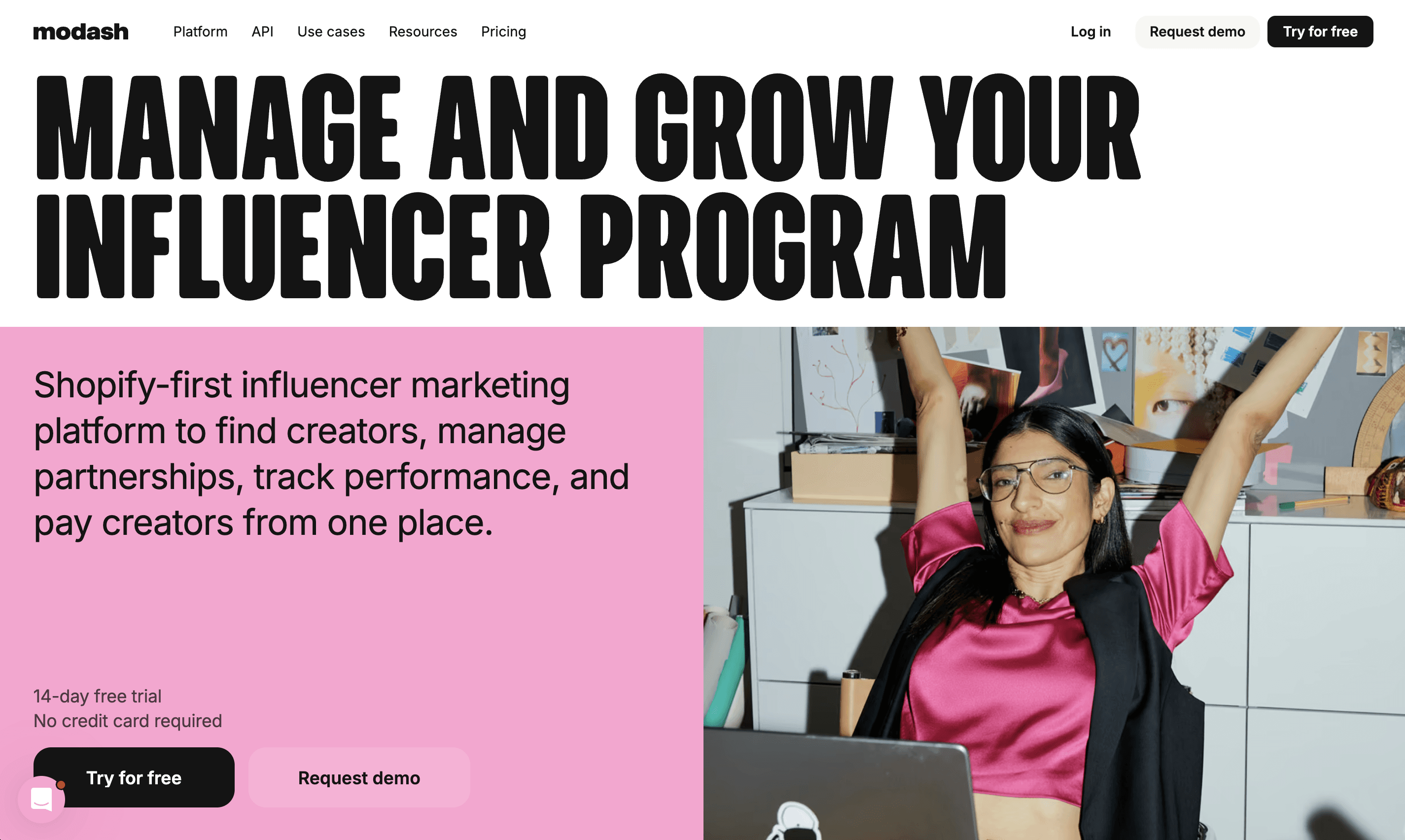
Modash is a discovery-first platform (350M+ creator profiles, the widest search surface in this guide) that has expanded into campaign management and payments, aimed at B2C and e-commerce teams. It is one of the few platforms with published pricing: as of 2026, plans start at $299 per month billed annually, with enterprise tiers from $14,700 per year.
Payments and treasury. Modash Payments uses a wallet model: brands fund a Modash wallet against a single consolidated invoice, and Modash pays creators by bank transfer in 180+ countries and 36 currencies, in local currency, with no creator-side fees. Modash positions itself as vendor of record, taking on international tax and compliance obligations. Payment processing fees apply above included payout volume (5% above $10,000 per year on standard plans, with higher thresholds on enterprise tiers). Modash does not disclose the payment rails behind the product.
Upfluence

Upfluence combines a large creator index with CRM, outreach automation, and e-commerce integrations, and serves both brands and agencies. Pricing is not published; as of 2026, per public sources, reported contracts run $30,000 to $70,000 per year.
Payments and treasury. Upfluence Pay supports bulk payments with automated currency handling, sent via PayPal. Upfluence markets built-in KYC verification, W-9 and W-8 collection, and automated tax record exports, and takes no percentage of creator payouts. Upfluence does not act as merchant of record.
Superfiliate
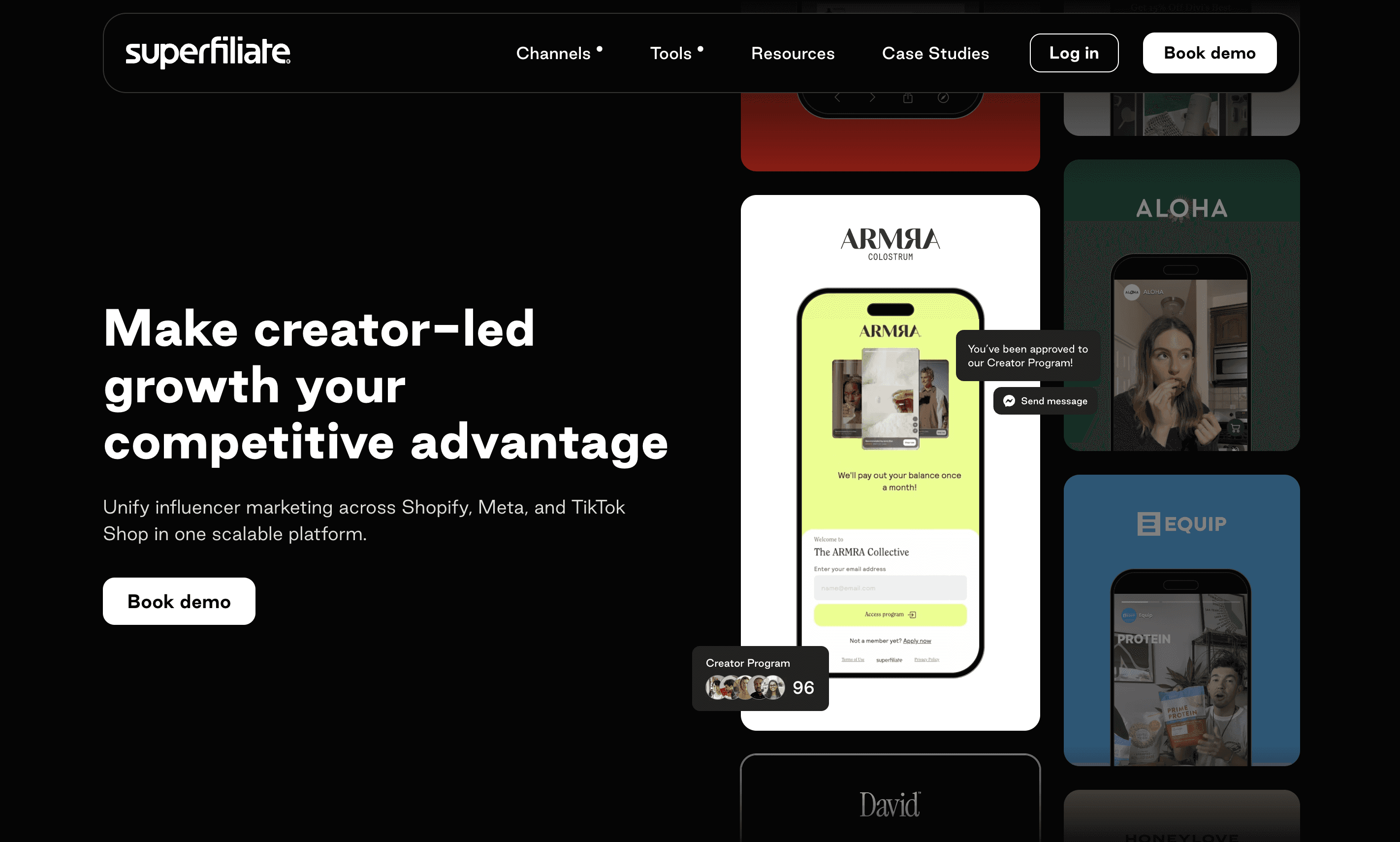
Superfiliate started in affiliate and referral marketing, turning creator links and discount codes into co-branded storefronts, and has expanded into a full creator marketing platform for Shopify brands: influencer discovery, gifting, Meta partnership ads, TikTok Shop automation, and social listening alongside its affiliate core. As of 2026, per public sources, reported pricing runs $299 to $999 per month by tier, with custom pricing for larger programs.
Payments and treasury. Superfiliate offers a native, co-supported integration with Lumanu for compliant creator payments, alongside PayPal, Tremendous, ACH, and Venmo options. Through the Lumanu integration, approved payouts push from Superfiliate to Lumanu, which acts as the single vendor of record: creator onboarding, tax forms, and compliance are handled once, client funds are held in segregated accounts with up to $3M in FDIC insurance, and payout status syncs back into Superfiliate. Finance teams fund the account through compliant invoices that work with existing AP and ERP systems.
Best for European market coverage
Kolsquare
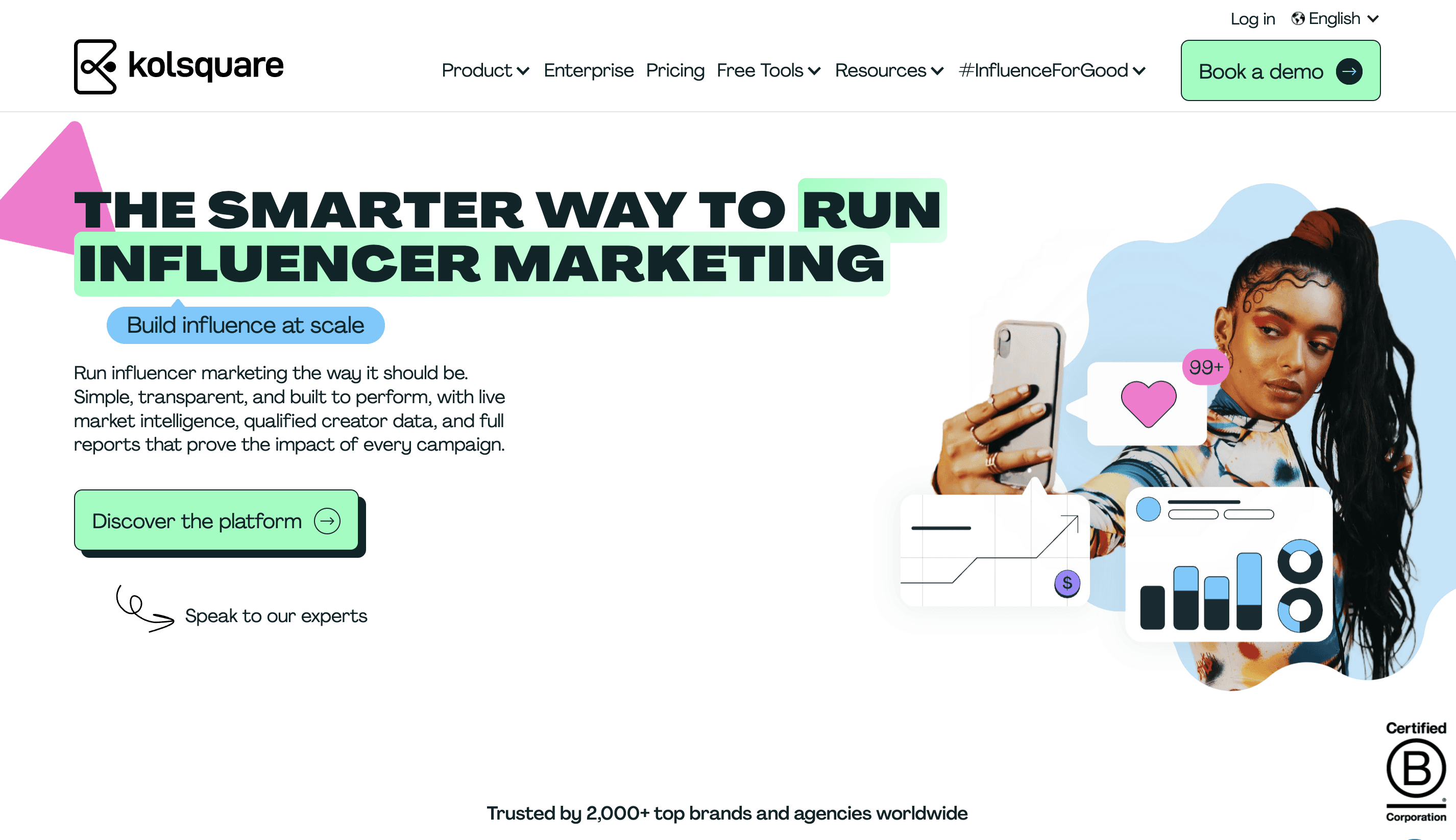
Kolsquare is a Europe-focused influencer platform (part of the Team.Blue group, B Corp certified) with a creator network spanning 180 countries and customers including Coca-Cola, Netflix, and Sephora. It is the natural starting point for programs centered on European markets and European regulatory requirements. Pricing is partially published: as of 2026, Discovery plans start at 500€ per month, with payment capabilities included in Enterprise tiers.
Payments and treasury. Kolsquare launched integrated payments in April 2025, powered by its partner GigaPay. Brands fund a campaign wallet against a GigaPay invoice, and GigaPay handles payouts, tax reporting, and compliance, including DAC7 reporting obligations, which Kolsquare markets explicitly. Kolsquare does not act as merchant of record; GigaPay carries the compliance role.
Best for affiliate and commerce-led programs
If your program leads with affiliate links, commissions, and creator storefronts rather than flat-fee campaigns, Superfiliate (covered above in the DTC section) is the platform in this guide built around that motion, with creator payments handled through its native Lumanu integration.
The payments and treasury gap
Payments is the least evaluated criterion in platform selection and the most common source of operational pain after launch. The pattern is consistent: discovery and reporting get scored in the RFP, payments gets a checkbox, and six months later the team is managing failed international transfers, chasing W-8BENs, and fielding creator complaints about fees and exchange rates.
Four questions separate the platforms above more than any feature comparison.
Where does your money sit? When you pre-fund campaigns, your money lands either in a pooled operating account (commingled with the platform's own funds and other clients' funds) or in a segregated account in your name. Finance teams care because the difference determines counterparty risk if the platform fails, deposit insurance coverage, and the audit trail. Platforms with dedicated Lumanu accounts (Sprout Social, CreatorIQ pairings, Superfiliate) hold client funds in segregated accounts with up to $3M in FDIC insurance, funded through compliant invoices that flow through existing AP and ERP systems. Most platforms do not publish how client funds are held, which is itself worth noting in procurement.
Who is the merchant of record? The merchant of record is the entity legally responsible for the payment transaction: vendor onboarding, sanctions screening, tax documentation, and reporting. When the platform is not the merchant of record (most are not; the regulated entity is usually the underlying processor), that liability sits somewhere, and buyers should know where. Some platforms take on vendor-of-record obligations themselves, some pass them to processors like Stripe or PayPal (in which case tax forms come from the processor, not the platform), and some partner with a merchant of record like Lumanu. Note that a merchant of record for creator payments is not unique to any one provider; several platforms structure this differently, and the right question is who carries the obligation, not whether the phrase appears on a website.
What do creators actually receive? Payout method and FX treatment determine whether your $1,000 payment arrives as $1,000. PayPal-based payouts convert currency at PayPal's rates and fees which often include a much higher spread when compared to competitive bank rates. Local-to-local bank transfers in the creator's currency avoid conversion erosion. Creators remember which brands pay them in full and on time, and talent managers compare notes.
Who handles the tax paperwork? For 2026, the US 1099-NEC reporting threshold is $2,000, which pulls far more creator relationships into reporting scope. In the EU, DAC7 places reporting obligations on digital platforms. Ask any platform: who collects W-9s and W-8s, who files 1099s, who handles VAT and GST documentation, and who answers when a creator's tax form is wrong?
Questions to ask any platform about creator payments
What payout methods do creators have, and in which countries and currencies?
Who sets the exchange rate on international payouts, and what fees do creators pay?
Are our campaign funds held in a segregated account or a pooled operating account?
Is there deposit insurance on our funds, and up to what amount?
Who is the merchant of record for payments made through your platform?
Who collects and files tax documentation (W-9, W-8, 1099-NEC, VAT/GST, DAC7)?
How do we fund the account: invoice through our AP system, credit card, or wire?
How many vendor setups does our procurement team need to complete?
Comparison table
Platform | Segment | Payment infrastructure | Fund treatment | Tax handling |
|---|---|---|---|---|
CreatorIQ | Enterprise | CreatorIQ Pay (Airwallex rails or own PayPal); pairs with Lumanu | Segregated, up to $3M FDIC via Lumanu dedicated account | US tax forms native; global via Lumanu |
Traackr | Enterprise | In-platform via Trolley | Direct from agency or brand | Agency or brand responsible |
Later Influence | Enterprise | Stripe, PayPal, Tango Card | Pooled funds | 1099s issued by processors |
Captiv8 | Enterprise (via Influential, Publicis) | Tipalti rails, 150+ currencies | Pooled funds | 1099s via Tipalti, VAT handling |
Sprout Social | Social-first | Native Lumanu integration (2026) | Segregated, up to $3M FDIC | Lumanu: W-9/W-8, 1099, global tax validation |
Grin | DTC | PayPal only | Pooled funds (Grin PayPal account) | W-9/W-8BEN collection, 1099s (US) |
Aspire | DTC | Lumanu (behind the scenes) | Handled via Lumanu infrastructure | Handled via Lumanu infrastructure |
Modash | DTC | Modash Payments wallet, 180+ countries, 36 currencies | Wallet model; rails not disclosed | Vendor of record (Modash) |
Upfluence | DTC | Upfluence Pay via PayPal | Pooled funds | KYC, W-9/W-8 collection, tax exports |
Superfiliate | DTC / Affiliate | Native Lumanu integration; PayPal, Tremendous, ACH, Venmo options | Segregated, up to $3M FDIC via Lumanu | Lumanu as vendor of record |
Kolsquare | Europe | GigaPay partnership | Wallet funded via GigaPay invoice | GigaPay, incl. DAC7 |
Pricing throughout this guide is as of 2026, per public sources; most platforms quote custom contracts.
How Lumanu fits
Lumanu is payment and compliance infrastructure for the creator economy, not an influencer marketing platform. It acts as merchant of record for creator payments in the US, UK, and 27 EU member states, pays out across 237 countries and territories in 132 currencies through local bank transfers, push-to-card via Visa Direct, and PayPal, and has processed over $1.5B in payments across 500K+ onboarded vendors. It works alongside the platforms in this guide, with native integrations for Sprout Social and Superfiliate, infrastructure behind Aspire, and dedicated-account pairings for platforms like CreatorIQ and Traackr. If you are evaluating any platform above and the payments answers come up short, the platform choice and the payments choice can be made separately. See how this works for affiliate and commission-based programs.
Frequently asked questions
What is an all-in-one influencer marketing platform?
An all-in-one influencer marketing platform combines creator discovery and vetting, campaign and relationship management, content and usage rights workflows, measurement and reporting, and creator payments in a single product. Platforms vary most on the payments function: some build on third-party rails like PayPal, Stripe, or Tipalti, while others partner with a dedicated payments and compliance provider such as Lumanu.
Which influencer marketing platform is best for enterprise brands?
CreatorIQ, Traackr, Later Influence, and Sprout Social target enterprise programs with governance, measurement, and multi-market support. CreatorIQ is known for API depth and serves 1,300+ brands. Traackr is analytics-led and strongest in beauty and luxury. Sprout Social Influencer Marketing suits enterprises that want influencer marketing inside their social management stack, with creator payments handled through a native Lumanu integration. Captiv8, formerly a standalone enterprise platform, was acquired by Publicis Groupe in 2025 and integrated into Influential; it is no longer sold standalone.
How do influencer marketing platforms pay creators?
Most influencer platforms process payments through third-party rails: Grin and Upfluence use PayPal, Later Influence uses Stripe and PayPal, Captiv8 uses Tipalti, Traackr uses Trolley, and Kolsquare partners with GigaPay. Sprout Social, Superfiliate, and Aspire run creator payments on Lumanu, which pays creators across 237 countries and territories in 132 currencies via local bank transfer, push-to-card, or PayPal. The infrastructure determines what fees and exchange rates creators absorb.
What is a merchant of record in influencer marketing?
A merchant of record is the entity legally responsible for a payment transaction, including vendor onboarding, sanctions screening, tax documentation, and regulatory reporting. Most influencer platforms are not the merchant of record for their payments; that responsibility sits with the underlying processor or a partner. Lumanu acts as merchant of record for creator payments in the US, UK, and 27 EU member states, which means brands complete one vendor setup instead of onboarding every creator individually.
Are creator funds held on influencer platforms FDIC insured?
It depends on how the platform holds client funds. Most platforms do not publish whether pre-funded campaign money sits in a pooled operating account or a segregated account. Platforms with dedicated Lumanu accounts, including Sprout Social and Superfiliate, hold client funds in segregated accounts with up to $3M in FDIC insurance, funded through compliant invoices compatible with major AP and ERP systems.
What questions should I ask an influencer platform about creator payments?
Ask what payout methods and countries are supported, who sets exchange rates and what fees creators pay, whether your funds sit in a segregated or pooled account, whether deposit insurance applies, who acts as merchant of record, who collects and files tax documentation including W-9, W-8, 1099-NEC,VAT, and how your finance team funds the account.
More Posts